Sign in. It’s quick, free and it’s up to you.
An account is an optional way to support the work we do. Find out more.
Sign in. It’s quick, free and it’s up to you.
An account is an optional way to support the work we do. Find out more.
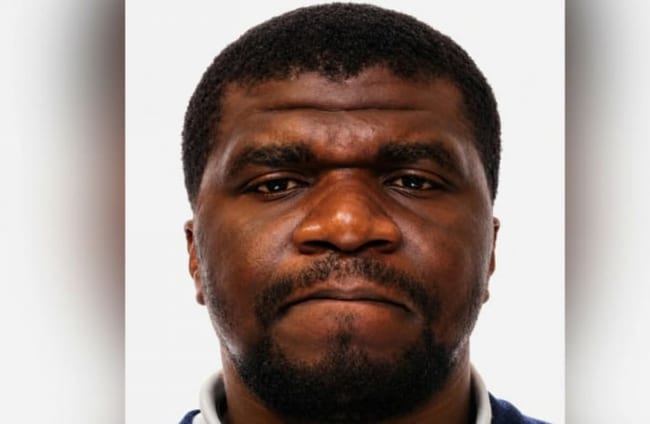
A MAN WHO became unresponsive while being detained by security staff outside Arnotts department store in Dublin city centre earlier this year died from a number of factors including a cardio-respiratory arrest after being restrained in a prone position, an inquest has heard.
The opening of the inquest into the death of Yves Sakila at Dublin District Coroner’s Court also heard that his body has still not been buried due to the failure of his family to reach agreement on the issue.
The fatal incident occurred on Henry Street, Dublin 1 shortly after 5pm on 15 May.
Gardaí were alerted to the scene after Sakila (34), a native of the Democratic Republic of Congo (DRC) who was living in a Salvation Army hostel on Granby Row, Dublin 1, had been detained by security staff over an alleged shoplifting incident in Arnotts.
Another man, aged in his 80s, was injured as Sakila was attempting to flee the store after allegedly stealing a bottle of perfume.
Sakila subsequently became unresponsive at the scene and was brought by ambulance to the Mater Misericordiae University Hospital where he was pronounced deceased a short time later.
The opening of the inquest on Thursday heard the results of a postmortem on Sakila’s body by State pathologist, SallyAnne Collis, showed he died from “a cardio-respiratory arrest following a period of prone restraint, mixed drug intoxication and a raised body mass index.”
The pathologist also listed schizophrenia as a contributory factor in his death.
The inquest heard two different strands of Ms Sakila’s family were being legally represented with lawyers attending on behalf of his “stepmother” in Ireland and his biological mother in the DRC.
It was also dominated by sharp exchanges between the coroner, Myra Cullinane, and solicitor, John Gerard Cullen, who was representing Sakila’s “stepmother”, Angel Issemezey.
Dr Cullinane said she did not accept Cullen’s contention that Sakila’s death was a death in custody for which he was seeking an inquest to be held with a jury.
The coroner said she was not going to make such an adjudication while investigations into his death were ongoing.
On the issue of holding an inquest with a jury she remarked: “We are nowhere near that.”
Dr Cullinane asked the solicitor to desist when he claimed that Sakila had “died while handcuffed.”
Cullen said it was “an obvious death in custody case” which raised issues under Article 2 of the European Convention on Human Rights.
The coroner intervened when Cullen tried to question a garda witness, Detective Garda Mairead Murphy who gave evidence about the formal identification of the deceased, if there was a conflict with gardaí from Store Street leading the investigation.
The solicitor remarked that gardaí from the same station had “operational control” over Sakila’s death.
Dr Cullinane said the solicitor’s attempt to raise the matter was “an abuse of process” as the coroner’s court was precluded from dealing with such matters.
She pointed out to Cullen that he was “going to have to take them elsewhere.”
The coroner also claimed the solicitor in pressing the matter was being “extremely disrespectful” to the deceased and had “raised the temperature” with an “aggressive” approach.
She pointed out that the only purpose of the hearing was to hear evidence about formal identification and the cause of death.
The inquest heard that the deceased’s body was formally identified to gardaí by Ms Issemezey at Dublin City Mortuary in Whitehall.
In a written statement, Ms Issemezey – who did not attend the hearing – said she had cared for Sakila since he and his uncle came to Ireland in 2004.
The inquest heard that Ms Issemezey told gardaí they had come from the DRC as part of a family reunification programme.
She said she was Sakila’s step-aunt, who was married to his uncle, but that she was always referred to as his “stepmother”, while she instructed her own children to always refer to the deceased as their “brother.”
Ms Issemezey also claimed that Sakila’s parents were dead – a claim that was disputed by solicitor, Albert Llusa, who told the inquest he was representing the deceased’s birth mother, Janet who lives in Kinshasa.
Llusa acknowledged that Sakila’s father is dead but said he had an attested copy of his mother’s passport as proof she was “very much alive.”
Detective Inspector Ken Hoare applied for a six-month adjournment of the inquest under Section 25 (1) of the Coroners Act on the basis that criminal proceedings are being contemplated.
Det Insp Hoare said he expected a garda file on the case would be submitted to the Director of Public Prosecutions (DPP) and was hopeful that a direction would be received within the six months.
He also confirmed that a separate, independent investigation into Sakila’s death with its own terms of reference is being conducted by Fiosrú (previously known as the Garda Síochána Ombudsman Commission).
When Cullen asked Det Insp Hoare if he accepted that Sakila had died in garda custody or immediately before, the coroner interjected to state the witness did not have to answer the question.
However, Det Insp Hoare replied that Sakila had “died in the Mater Hospital where he was brought from Henry Street.”
Dr Cullinane also observed it would be “very desirable” if Sakila’s family in both Ireland and the Congo could reach an agreement on arrangements for his burial after being informed that it had still not taken place.
The coroner granted the application for an adjournment and listed the case for further mention on 21 April 2027.
Following Sakila’s death, gardaí said they had recovered footage from CCTV as well as social media of the incident as part of their investigation into Sakila’s death.
One video, which showed the victim being held on the ground for almost five minutes, was widely shared on social media platforms.
It recorded Sakila moaning in distress as his face was pushed into the pavement, while it also appeared that a security guard kneeled on his head or neck at one point.
The other injured male was brought to the hospital for treatment for non-life threatening injuries.
Sakila had issues with drug addiction and had been homeless for several years.
He had spent several periods in prison and had been staying in the Salvation Army’s Granby Lifehouse for two years before his death.
In a statement following Sakila’s death, Arnotts said it was actively cooperating with the garda investigation into the circumstances of the fatal incident as well as conducting a full review with the independently contracted security firm that it uses in its Henry Street outlet, Synergy Security Solutions.
Arnotts said it took the concerns of the Congolese community in Ireland, who had staged a vigil outside the department store, “with the utmost seriousness.”
The Irish Council for Civil Liberties claimed the level of force used by security guards to restrain Sakila was “disproportionate and excessive”, while the Irish Human Rights and Equality Commission called for “a full, independent and prompt investigation.”
Ireland’s special rapporteur on racism and racial equality, Ebun Joseph, also called for an independent investigation into Sakila’s death following what she described as “deeply disturbing” scenes.
A demonstration held following the incident heard calls for a boycott of Arnotts from some members of the African community.
A forensic pathologist from the UK has also carried out an independent postmortem examination of Sakila’s body on behalf of his family.
The victim’s remains were returned to Ireland in September following a failed attempt to repatriate his body back to the DRC for burial.


have your say