Sign in. It’s quick, free and it’s up to you.
An account is an optional way to support the work we do. Find out more.
Sign in. It’s quick, free and it’s up to you.
An account is an optional way to support the work we do. Find out more.
LAST UPDATE | 19 Jun
ISRAEL AND HEZBOLLAH have agreed a ceasefire, a US official has claimed.
The new truce beginning immediately was brokered by US and Qatari mediators following talks with Israel and Iran, the official told AFP on condition of anonymity.
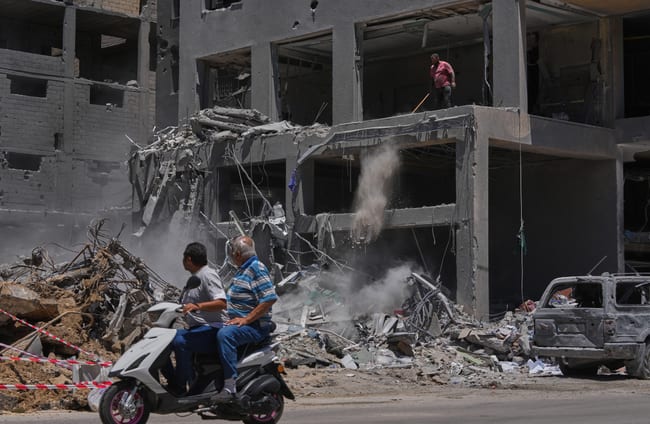
Despite this, Lebanese media reported an Israeli airstrike in the southerrn area of Jezzine after the agreement was announced.
It comes after new attacks in Lebanon put the deal to end the Middle East war under strain, with Switzerland earlier confirming that planned talks on implementing the agreement between the US and Iran had been postponed.
“The planned talks between the US, Iran, Qatar and Pakistan have been postponed,” the Swiss foreign ministry said in a message to AFP.
“Switzerland remains ready to facilitate these talks. The relevant preparatory work at Burgenstock is continuing,” it added, without providing a new date for the talks.
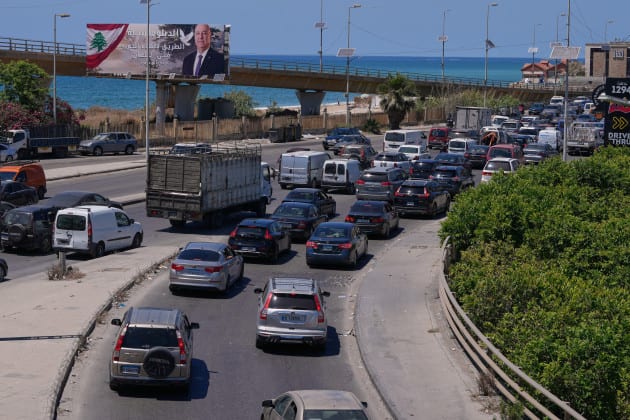 Displaced people fleeing Israeli strikes in southern Lebanon sit in traffic on a highway leading to Beirut, in the southern port city of Sidon. Alamy Stock Photo
It also appeared increasingly unlikely that a signing ceremony between the United States and Iran would take place as planned after US Vice President JD Vance pulled out on Thursday.
“The logistics of these negotiations have never been simple or predictable. As of now the Vice President is not departing tonight,” a White House spokesperson said of Vance on Thursday. “We look forward to beginning technical talks as soon as possible.”
The signing of the memorandum of understanding this week was intended to end the conflict in Iran, reopen the Strait of Hormuz and begin a 60-day period for talks on wider issues, including Tehran’s nuclear programme.
At the same time, the deal was to end the fighting in Lebanon, but Israel and Hezbollah continued to launch attacks.
Earlier today, Israel’s Prime Minister Benjamin Netanyahu said Israeli troops will stay in Lebanon “as long as necessary”.
“Israel will not tolerate attacks on our soldiers or our territory, and it will exact a very heavy price from Hezbollah for these attacks,” he said in a statement after the military announced the deaths of four Israeli soldiers in Lebanon.
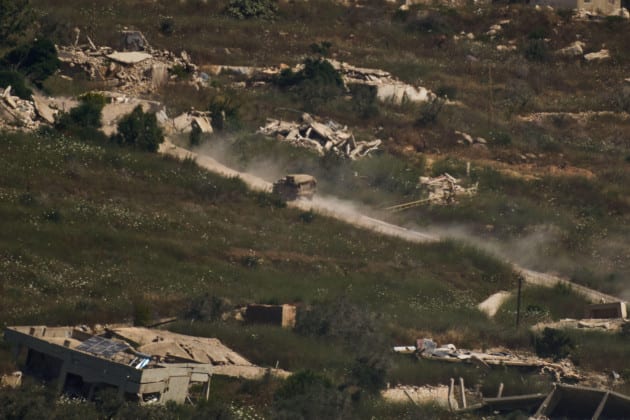 An Israeli military vehicle moves past destroyed buildings in southern Lebanon as seen from northern Israel. Alamy Stock Photo
Israeli defence minister Israel Katz had also said the military would stay in Lebanon, adding it would respond “with considerable force” to any attack.
Israel’s war on Lebanon has killed at least 3,912 people, wounded 11,873 others and displaced more than one million people since 2 March, according to the Lebanese health ministry.
In Iran, the Tasnim agency said “nothing has been confirmed” about the Iranian delegation’s trip to Switzerland.
The agreement has been signed separately by US President Donald Trump and his Iranian counterpart Masoud Pezeshkian.
Iran’s supreme leader Ayatollah Mojtaba Khamenei said on Thursday that he had approved the agreement, despite reservations, even as the United States lifted a blockade of Iranian ports.
Mojtaba Khamenei, who took over after his father and longstanding ruler Ali Khamenei was killed in an airstrike on the first day of the war on 28 February, said in a written statement that he held a “different view” on the deal, without elaborating.
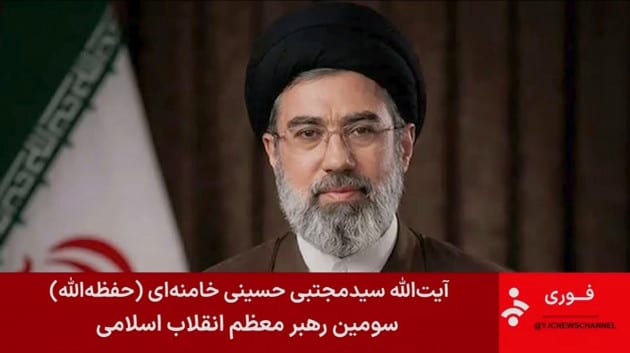 Mojtaba Khamenei pictured during a state address. Alamy Stock Photo
“But I issued my permission due to the commitment” made by officials including Pezeshkian to “protect the rights of the Iranian nation”.
“Face-to-face negotiations” with the United States will be held in the future, but that does not “mean accepting the enemy’s point of view”, he added.
Iran’s chief negotiator Mohammad Bagher Ghalibaf warned today that Tehran would give a “decisive” response if the agreement was breached.
EU leaders are due to hold a discussion on the Middle East this afternoon at a European Council summit in Brussels. It is the last summit of its kind before Ireland takes over the EU presidency in a couple of weeks.
Speaking to reporters this morning, Taoiseach Micheál Martin said the US-Iran talks being called off was “regrettable” but “not surprising”, adding: “I would encourage continued dialogue, adherence to the agreement, because the world needs stability and the world needs peace.”
He said Ireland would be “looking for proposals from the [European] Commission in respect of the illegal settlements”.
“I think Europe has to send a very clear signal that what has been happening and what continues to happen is unacceptable in Gaza and in the West Bank in particular, and also in Lebanon.”
American forces on Thursday lifted their naval blockade of Iranian ports that had prevented ships from sailing to or from the Islamic republic, the US military said, noting that American warships “will remain in the general area”.
Activity was still muted in the Strait of Hormuz, the strategic bottleneck for energy shipments that Iran blockaded during the conflict.
Three Saudi oil tankers left the Gulf through the strait on Thursday, maritime trackers said, as did a French vessel loaded with liquefied natural gas.
Iranian state TV, citing a statement from the country’s Supreme National Security Council, said that ships “seeking passage through the Strait of Hormuz must submit their request” to a new government body tasked with overseeing the waterway.
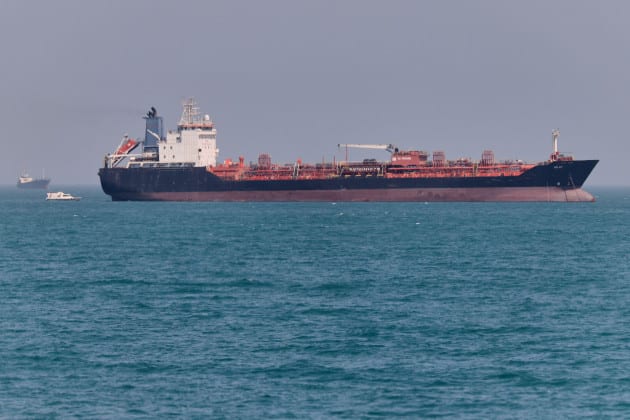 A tanker in the Strait of Hormuz. Alamy Stock Photo
In keeping with the terms of the deal, it added, “no fees whatsoever will be collected from applicants for a period of sixty days”.
The deal should bring an end to the current US-Israeli conflict with Iran, which saw five weeks of all-out war until a ceasefire was struck in early April.
Some in Tehran were downbeat at the prospects for peace.
“I have no hope that this is a lasting agreement. Maybe after the 60 days they start fighting again,” said Mina, 54, a psychologist from Tehran.
Her sentiment was shared by French President Emmanuel Macron, who presided over the signing at the Palace of Versailles in what he described as a “spontaneous” move by Trump.
Macron said he did not believe that the war was “totally finished”.
Under the text, Washington commits to immediately waive oil sanctions crippling Iran’s economy.
And once a final agreement is reached on Iran’s nuclear programme, the United States will facilitate the release of a $300 billion (€261 billion) reconstruction fund supported by regional nations, the deal says.
Trump’s decision to end the war, in which 13 US service members were killed and a vast proportion of US ammunition stockpiles was used, has unsettled some of his allies at home.
US Senator Bill Cassidy from Trump’s Republican Party described it as the “worst foreign policy blunder in decades”.
But Trump argued that using military force to wring more concessions out of Tehran would have been counterproductive.
“The only way I can get tougher is if I go in there for another two or three weeks and continue to bomb the hell out of ‘em. Right? But what does that get us? The Strait of Hormuz will not be open,” he told Axios.
“We wouldn’t have oil for months,” he said. “This is the kind of thing that could cause a worldwide depression.”


have your say