Sign in. It’s quick, free and it’s up to you.
An account is an optional way to support the work we do. Find out more.
Sign in. It’s quick, free and it’s up to you.
An account is an optional way to support the work we do. Find out more.
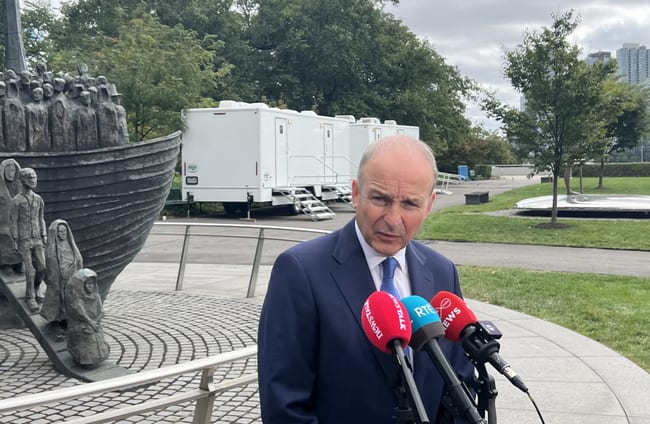
TAOISEACH MICHEÁL MARTIN has signalled that immigrant workers already in Ireland may be able to qualify for citizenship under the existing five-year rule, despite the incoming reforms.
Earlier this month, Justice Minister Jim O’Callaghan got government sign-off to tighten rules around citizenship.
Under the reforms, a person seeking Irish citizenship will have to live legally in Ireland for eight years, rather than the current five.
They will also be required to pass an English or Irish language test and display an “understanding” of Ireland’s culture and values.
The change to the five-year rule has been criticised as an unfair shifting of the goalposts for the thousands of legal residents who have built their lives around the existing rule.
Asked by The Journal about the rule change today, the Taoiseach said there will be further discussion on the proposed changes, including around the five-year rule, adding: “We will be fair”.
“You have people working here who came in through work permits and so forth, and we understand they’ve played by the rules as they existed to date, so these are issues that fall for further discussion,” the Taoiseach said.
He added that O’Callaghan is “working on the details” and will come back to cabinet with proposals.
Taoiseach Micheál Martin has signalled that immigrant workers already in Ireland may be able to qualify for citizenship under the existing five year rule.
— TheJournal Politics (@TJ_Politics) September 24, 2026
This is despite the incoming law change requiring a person be resident in Ireland for eight years. pic.twitter.com/ZCqPG52Fzk
The Taoiseach claimed that part of the reason the citizenship rules were in need of reform was because “there was a situation where some people coming through the asylum process, for a combination of reasons, some being the slowness of the administration of applications and appeals, but many ended up in a legal situation and before you knew it people were five years in the country and granted citizenship”.
However, a person can only be considered for citizenship once they have been granted international protection. Time spent living in Ireland while seeking asylum typically does not count towards what is known as reckonable residence.
Before December 2025, a person granted international protection status could apply for citizenship after a period of three years of reckonable residence.
Effective from 8 December 2025, refugees are generally required to have five years of reckonable residence in the State to meet the eligibility criteria for citizenship.
Applications for citizenship submitted before this date, however, continue to be assessed under the previous residency requirement.
Editor’s note: This article was updated to state that a person who seeks asylum in Ireland can only be considered for citizenship once they have been granted international protection.


have your say