Sign in. It’s quick, free and it’s up to you.
An account is an optional way to support the work we do. Find out more.
Sign in. It’s quick, free and it’s up to you.
An account is an optional way to support the work we do. Find out more.
“IT SIMPLY CANNOT be the case the HSE pays its bills… and then at the same time the HSE fails to collect the income from sources which legitimately owe money to the service.”
This concern was raised in one of the last memos former HSE chief executive Bernard Gloster wrote before handing over the reins in March.
“The Minister has asked for immediate attention to these matters,” he added.
Drug and medicine discounts – called rebates – are a significant source of such income. Major issues have been identified in this complex system of collecting money, The Journal Investigates can now reveal.
Most notably, a 2025 internal audit of rebate collection found “significant risk” of loss of income to the HSE.
Rebates are like the offers you often see from electricity suppliers – choose this plan and get €50 cash back.
Instead of an upfront discount, the HSE buys drugs from pharmaceutical manufacturers for 100% of an agreed price. It then invoices the pharma company to get back a percentage of what they paid.
A discount of sorts, but one that requires a lot of admin.
This system was negotiated between the government and pharma industry bodies – the Irish Pharmaceutical Healthcare Association (IPHA) and Medicines for Ireland (MFI).
Rebates were worth €480 million to the HSE in 2025. To put it into perspective, the HSE spent €4.2 billion on drugs last year, and got 11.5% of it back in rebates.
But from documents obtained by The Journal Investigates, it is clear that the HSE has not collected all money owed.
Unchecked rebate calculations, outdated IT systems, suppliers refusing to pay and pressurised staffing were just some of the income loss risks outlined in the audit.
Many documents were heavily redacted so it was not possible to calculate how much income was lost in recent years. But given the annual drug bill, even a small percentage of uncollected rebates would amount to millions.
This is at a time when the health service’s financial deficit is forecast to hit €1 billion by the end of the year and Health Minister Jennifer Carroll MacNeill has said half of the HSE’s regions have already “eaten into” their 2027 budgets.
To allow part of this income “to be lost, it’s just quite disrespectful to taxpayers’ money,” said Dr Suzanne Crowe, consultant in paediatric intensive care. Commenting on the “huge health budget”, she added:
It absolutely behoves the system to make sure that we’re actually getting good value for money.
It is often said that “money being spent on one drug is money that we cannot spend” on another drug or health service, explained Ronan Mahon, chair of the Health Economics Association of Ireland.
That is also true when money due to the HSE is not collected, he added.“That has a health effect.”
Because of this, Mahon said, “it’s very, very important that we try and get these things right.”
A HSE spokesperson listed a number of actions taken to address Bernard Gloster’s concern: “The HSE has strengthened oversight of rebate collection, established a dedicated working group, increased management focus on outstanding balances, and continues to engage actively with suppliers to ensure payments are received.”
They said that all audit “recommendations have been implemented and actions arising have been completed”.
A Department of Health spokesperson said: “The HSE recognises the importance of collecting all income due to the organisation. Effective income and rebate collection supports the delivery of health services and strengthens financial stewardship.”
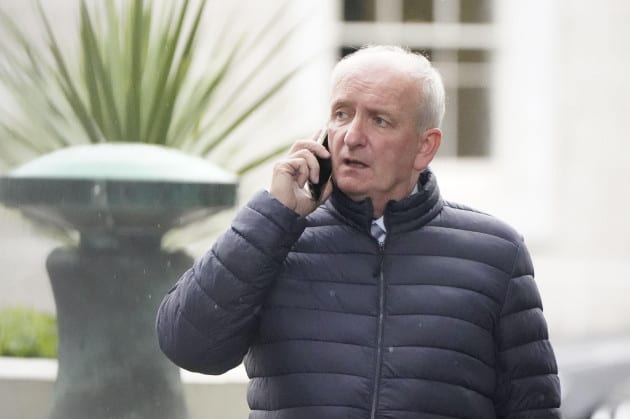 Ex-CEO Bernard Gloster raised concern over the HSE failing to collect money owed before leaving last March. Alamy Stock Photo
An internal audit from June 2025, obtained by The Journal Investigates, found “weaknesses” in “governance, risk management and controls” in the collection of pharma rebates.
It uncovered an outdated system where rebates “are calculated in Excel”, PDFs of invoices are uploaded to a finance system and supporting documentation is then added by a different staff member.
The rebates they examined were for the HSE’s Primary Care Reimbursement Service (PCRS), which includes medicines you get from chemists under various drug payment schemes, but not drugs used by acute hospitals.
The auditors made four recommendations, one of which addressed “a significant risk of substantial financial loss, and/or accounting error, and/or of major non-compliance”. The other three were described as moderate risks.
The significant finding included a specific rebate worth €405,000 where the supplier – rather than community pharmacists – was providing the quantity of drug sold to the HSE. This is not allowed under the agreed system as the HSE – not the supplier – must calculate the amount and value of medicine bought.
It also detailed disputes with pharma suppliers over rebates, which often resulted in new invoices being issued for lower amounts. No documented process was in place for the finance team to follow when these disputes occurred.
The amount of rebate paid depends on the type of drug, and the calculation is often complicated, especially for newer, more expensive medicines.
One audit finding stated that for these newer drugs, “rebates have increased in complexity in the last number of years”. Yet, there was “no evidence of review of the rebate calculations”.
All audit recommendations were to be implemented by June this year. The HSE told us that all have now been “fully addressed, with ongoing monitoring in place to ensure the controls remain effective”.
They said that “suppliers accept that rebates are payable” in the vast majority of disputed cases and mentioned a settlement with one supplier in 2026 which “resulted in a significant rebate payment being made to the HSE”.
“Potential system enhancements continue to be considered” for the outdated collection system and “reviews of rebate processes and calculations are now conducted on an ongoing basis”.
Once rebate invoices are issued, their problems don’t stop. The audit found an increasing amount of overdue payments year-on-year.
Invoices overdue by four months rose from €30.3 million in December 2022 to €54.1 million in August 2024. The Journal Investigates asked for the latest overdue invoice figures, but these were not provided by the HSE, but a spokesperson told us:
“Outstanding rebate debt has reduced from 2.58% of related income at the end of 2025 to 1.6% of related income at [the] end of August 2026, reflecting continued progress in collections and active debtor management.”
With €480 million of rebate income collected in 2025, The Journal Investigates calculated 2.58% was €12 million of debt. Rebate income has grown year-on-year, but 1.6% amounts to almost €7 million of debt at 2025 income levels.
The HSE said “the majority of balances” are from this year and “final figures will be confirmed as part of the year-end reconciliation process”.
Adding to this issue is a lack of dedicated HSE staff to chase debtors. Instead, this is one of the many tasks assigned to the small rebate collection team. There were five staff managing PCRS rebates at the time of the audit.
We asked the HSE if this has changed. A spokesperson said: “A review identified the need for additional resources, and recruitment is underway to strengthen the unit’s capacity and support functions to include rebate management activities.”
Slower collection of rebates was caused by “a number of multi-national suppliers” which were “regarded as slow payers” as well as some suppliers “not paying or engaging with PCRS”.
Auditors were also told that “continual staff movement” within pharmaceutical manufacturers was causing rebate debates as HSE staff had to constantly “provide information on the nature of invoices and calculations.”
The HSE told us that “participation in rebate arrangements remains a longstanding and integral component of the State’s approach to securing value for money from publicly funded medicines”.
The audit also noted “a small number of companies” who do not identify as IPHA members consider “national rebates do not apply to them”. On this, the HSE said it “engages directly with these companies and uses all available commercial mechanisms to encourage compliance with rebate arrangements”.
When asked about the significant challenges identified in the rebate collection process, a spokesperson for the Department of Health said: “Rebate collection is an operational responsibility” of the HSE.
“The HSE is enhancing oversight of income collection arrangements,” including PCRS rebates, they said. “This work is focused on ensuring that all available avenues for income recovery are utilised, that claims and rebates are processed in a timely manner, and that appropriate follow-up takes place where amounts remain outstanding.”
An Irish Pharmaceutical Healthcare Association (IPHA) spokesperson said it was “not in a position to comment” on the audit findings “as we were not advised or informed of the findings of this HSE audit report”.
They added: “The 2026 Agreement committed IPHA members to continuing their rebate contributions.”
A Medicines for Ireland (MFI) spokesperson said that MFI “recognises the importance of the timely implementation of the rebate arrangements”, and added:
“MFI’s role is to represent its membership in negotiating the overarching terms of the Framework Agreement with the State and to support its effective implementation.
“However, the administration and settlement of individual rebate payments are commercial matters between the pharmaceutical companies concerned and the HSE’s Primary Care Reimbursement Service (PCRS).”
They also said that “MFI maintains ongoing engagement” with relevant government departments and the HSE, “including through an established twice-yearly review mechanism”.
Given rebates risk the HSE losing money, and also add a significant admin burden to both the HSE and pharma manufacturers, the obvious question is: Why is this system in place?
Health economist Ronan Mahon told us that it allows pharmaceutical companies to keep drug list prices high.
He has heard stakeholders say that “the ‘most favoured nation’ policy complicates matters”. This principle applies to members of the World Trade Organisation (WTO), including EU countries and the United States. The WTO rules state that trade advantages granted to one country must be extended to all members.
For drug prices that means that “companies would want to keep their list prices very high because that might be a reference price for the US, in particular”, Mahon explained.
That’s where rebates come in, as though the drug list prices can be the same across countries, commercial discounts in the form of rebates can be used to bring the net price down.
But when setting up these systems and agreements, “there’s a risk of making them too complicated”, Mahon said. “There’s virtue in simplicity.”
“Arguably, we’re better off without a rebate and just getting better net prices.”
Reporter / Editor: Maria Delaney • Social Media: Cliodhna Travers • Main Image Design: Lorcan O’Reilly



have your say